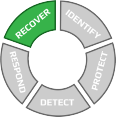
The NIST Cybersecurity Framework (CSF) is a voluntary framework developed by the National Institute of Standards and Technology that organizes cybersecurity activities into five core functions — Identify, Protect, Detect, Respond, and Recover. It provides a common structure for assessing and improving an organization’s cybersecurity posture, and is widely used as a foundation for meeting other regulatory or contractual security requirements, even when NIST CSF adoption itself isn’t legally mandated.
NIST CSF is voluntary for most private-sector organizations, but it’s frequently referenced or required indirectly — through cyber insurance applications, client security questionnaires, vendor risk assessments, and as the underlying structure for mandatory frameworks like CMMC, which builds on NIST SP 800-171. Many organizations adopt NIST CSF because it maps cleanly to nearly every other compliance obligation they face.
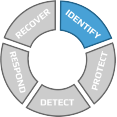
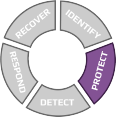
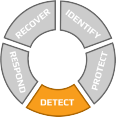
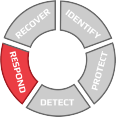
Identify (understand your assets, risks, and business context), Protect (implement safeguards like access control and training), Detect (identify security events as they occur), Respond (contain and mitigate active incidents), and Recover (restore capabilities and services after an incident). Each function includes specific categories and subcategories an organization can assess itself against to identify gaps.
For a small to mid-sized business, an initial NIST CSF gap assessment typically takes two to four weeks — reviewing current controls against all five framework functions, identifying gaps, and producing a prioritized remediation roadmap. Full implementation of identified gaps varies widely depending on findings, but most organizations see meaningful risk reduction within 90 days of starting remediation.
CMMC Level 2 is built directly on NIST SP 800-171, which itself aligns closely with NIST CSF’s Protect and Detect functions. Organizations that have already implemented NIST CSF controls have a significant head start toward CMMC compliance, HIPAA Security Rule alignment, and FTC Safeguards Rule requirements — the frameworks share substantial technical overlap even though they’re enforced by different regulators.
NIST CSF itself has no formal third-party certification process — it’s a self-assessment framework, not a certification like CMMC’s C3PAO assessments. A NIST CSF assessment produces a documented maturity score and gap analysis that demonstrates due diligence to insurers, clients, and regulators, but it doesn’t result in a certificate. Organizations that need formal certification, like CMMC, use NIST CSF as a stepping stone toward those more rigorous, audited frameworks.