
The Hidden Cost of Shadow AI

Your Employees Are Already Using AI. The Question Is Whether You Know Where. Artificial Intelligence has become the fastest-adopted workplace technology many businesses have ever seen. Unlike previous technology shifts, AI is not arriving through a formal implementation project. Employees are finding their own tools, experimenting with them, and incorporating them into their daily workflows […]
The AI Maturity Journey: From Experimentation to Business Transformation

Organizations are under pressure to do something with AI, but many struggle with where to start and how to turn curiosity into measurable business value. The path is rarely a giant leap. Instead, successful AI adoption tends to follow a progression: from experimentation, to automation, to purpose-built solutions that eliminate real business challenges. Many organizations […]
What the CMMC 60-Day Pause Means for Your Business

On July 13, 2026, the Department of Defense announced a significant change to the CMMC rollout. Phase II of CMMC, which would have required third-party assessments conducted by Certified Third-Party Assessment Organizations (C3PAOs), was suspended just months before its scheduled November 10, 2026 implementation date. At the same time, DoD CIO Kirsten Davies established a […]
Why Law Firms Are High-Value Targets in 2026

Key Takeaways Law firms hold sensitive client data under attorney-client privilege — making them high-value ransomware and data exfiltration targets. A single breach triggers bar association complaints, malpractice exposure, and client loss simultaneously. Phishing, unencrypted file storage, and weak endpoint security are the most common entry points attackers exploit against law firms. Cyber insurance premiums […]
Financial Firms: Security Gaps Regulators Are Watching Closely

Key Takeaways The FTC Safeguards Rule (updated June 2023) requires MFA, annual penetration testing, and a written incident response plan for covered financial institutions. Regulators are actively examining security programs and vendor contracts — not just responding to breaches after the fact. Missing a Qualified Individual designation or board-level security reporting is a common, easily […]
Antivirus vs. Endpoint Detection & Response (EDR): What Protection Really Looks Like Today

Key Takeaways Traditional antivirus detects known malware by signature — it cannot detect novel threats, fileless attacks, or living-off-the-land techniques used in modern ransomware. Endpoint Detection and Response (EDR) monitors endpoint behavior continuously, detecting anomalies even when no known malware signature is present. EDR provides telemetry for forensic investigation after an incident — antivirus provides […]
Employee Spotlight: Ethan Anthony
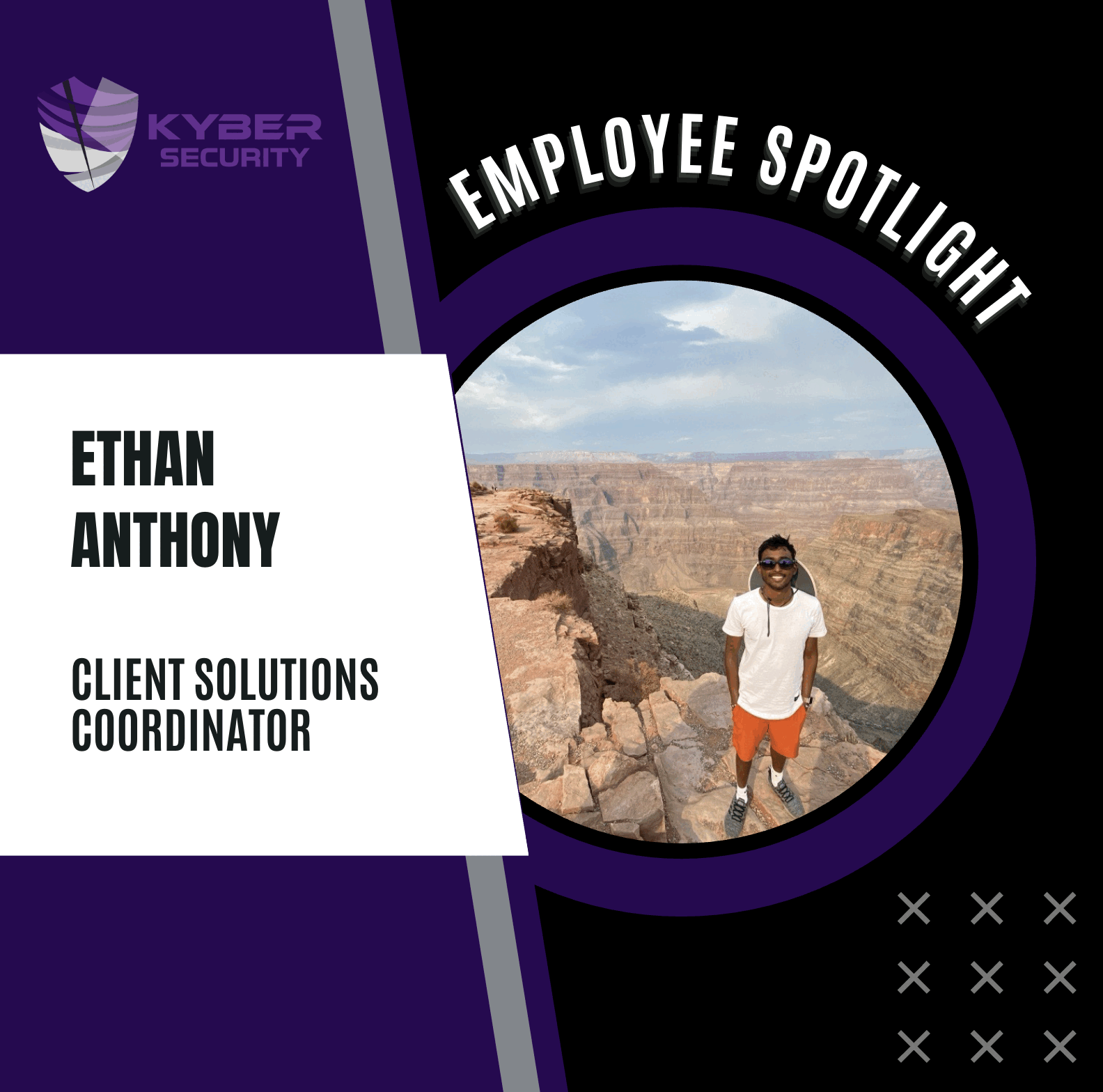
As Kyber Security’s Client Solutions Coordinator, Ethan Anthony helps ensure clients receive the support, communication, and attention they need to succeed. Although he’s only been with Kyber for a few months, he’s already made a strong impression through his positive attitude, willingness to learn, and focus on building meaningful client relationships. Since joining the team, […]
Your Vendor Got Breached, Now What?

Key Takeaways Third-party vendor breaches are among the most common initial access vectors for SMB attacks — your vendor's security posture is part of your attack surface. When a vendor notifies you of a breach, immediately isolate shared credentials, audit access logs, and activate your incident response plan. Under HIPAA, a business associate breach that […]
MSP Accountability: What Should They Really Be Responsible For?

Key Takeaways A standard MSP contract covers uptime, helpdesk response, and device management — it does not cover security monitoring, incident response, or compliance. When an MSP-managed environment is breached, liability typically falls on the client unless the contract explicitly assigns security responsibilities to the MSP. MSSPs and security-forward MSPs include 24/7 threat monitoring and […]
The Hidden Cost of “We’ve Never Had a Breach”

Key Takeaways "We've never had a breach" means an organization has not yet detected a breach — not that one hasn't occurred. Dwell time — the period between initial compromise and detection — averages over 200 days for SMBs without continuous monitoring. Undetected breaches accumulate regulatory exposure: HIPAA and FTC Safeguards violations accrue per day, […]